
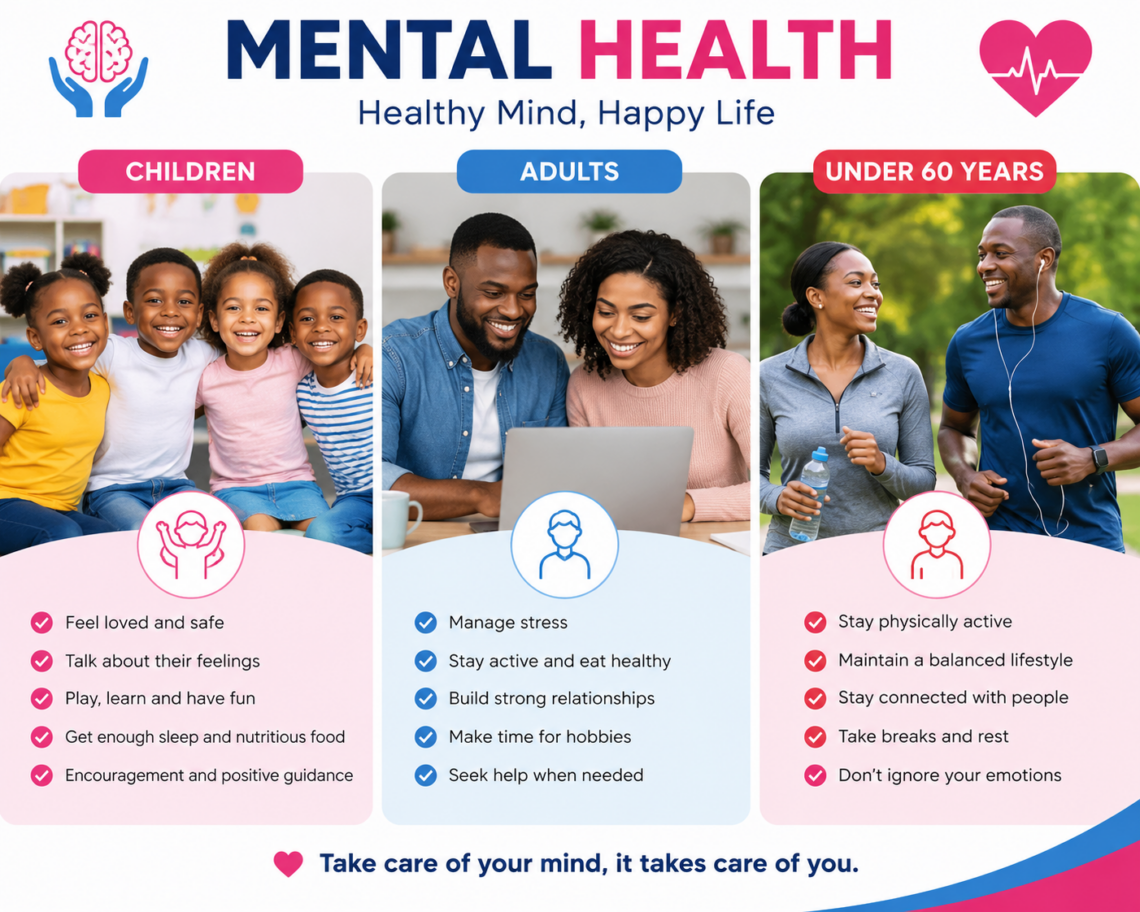
Mental health is an important part of overall health. It affects how we think, feel, behave, handle stress, relate to other people, and make decisions. Everyone has mental health, including children, teenagers, adults, and older adults.
🧠 What is mental health?
Mental health is our emotional, psychological, and social well-being. Good mental health does not mean that a person is happy all the time or never experiences stress, sadness, fear, or anger. It means being able to cope with life’s challenges, maintain relationships, function in daily life, and seek help when things become difficult.
👧 How children can care for their mental health
Children need support from parents, guardians, teachers, and other trusted adults.
- ❤️ Give them love, attention, and reassurance.
- 🗣️ Encourage them to talk about their feelings.
- 🎮 Allow time for safe play and enjoyable activities.
- 😴 Make sure they get enough sleep.
- 🥗 Encourage healthy, balanced meals and enough water.
- 🏃 Encourage physical activity and outdoor play.
- 📱 Set healthy limits around phones, games, and social media.
- 👨👩👧 Create a safe environment where they can ask questions without fear.
- 🚨 Take significant changes in behavior, prolonged sadness, fear, or withdrawal seriously and seek professional help when needed.
🧑 How adults can care for their mental health
Adults often deal with work, finances, relationships, parenting, education, and other responsibilities. Some useful habits include:
- Get adequate sleep and maintain a regular sleep schedule.
- Exercise regularly.
- Eat nutritious foods and drink enough water.
- Make time for family, friends, hobbies, and relaxation.
- Talk to someone you trust when you’re struggling.
- Take breaks when stress becomes overwhelming.
- Avoid using alcohol or drugs as a way of coping with difficult emotions.
- Learn healthy ways to manage stress, such as breathing exercises, prayer or meditation, walking, journaling, or other relaxing activities.
- Seek a doctor, psychologist, counselor, or other qualified professional when problems persist or interfere with everyday life.
👨🦳 People under 60
For teenagers and adults below 60, mental health can be supported by maintaining a balanced lifestyle rather than focusing only on problems when they appear.
Try to maintain regular sleep, physical activity, social connections, healthy eating, meaningful activities, and time away from excessive digital media. Don’t ignore persistent anxiety, sadness, anger, loneliness, hopelessness, major changes in sleep or appetite, or difficulty functioning at school, work, or home.
💙 Remember
Taking care of your mental health is not a sign of weakness. It is part of taking care of your whole body.
If you or someone you know is struggling, talking to a trusted person and seeking professional support can be an important first step. If someone is in immediate danger or may hurt themselves or someone else, seek emergency help immediately.